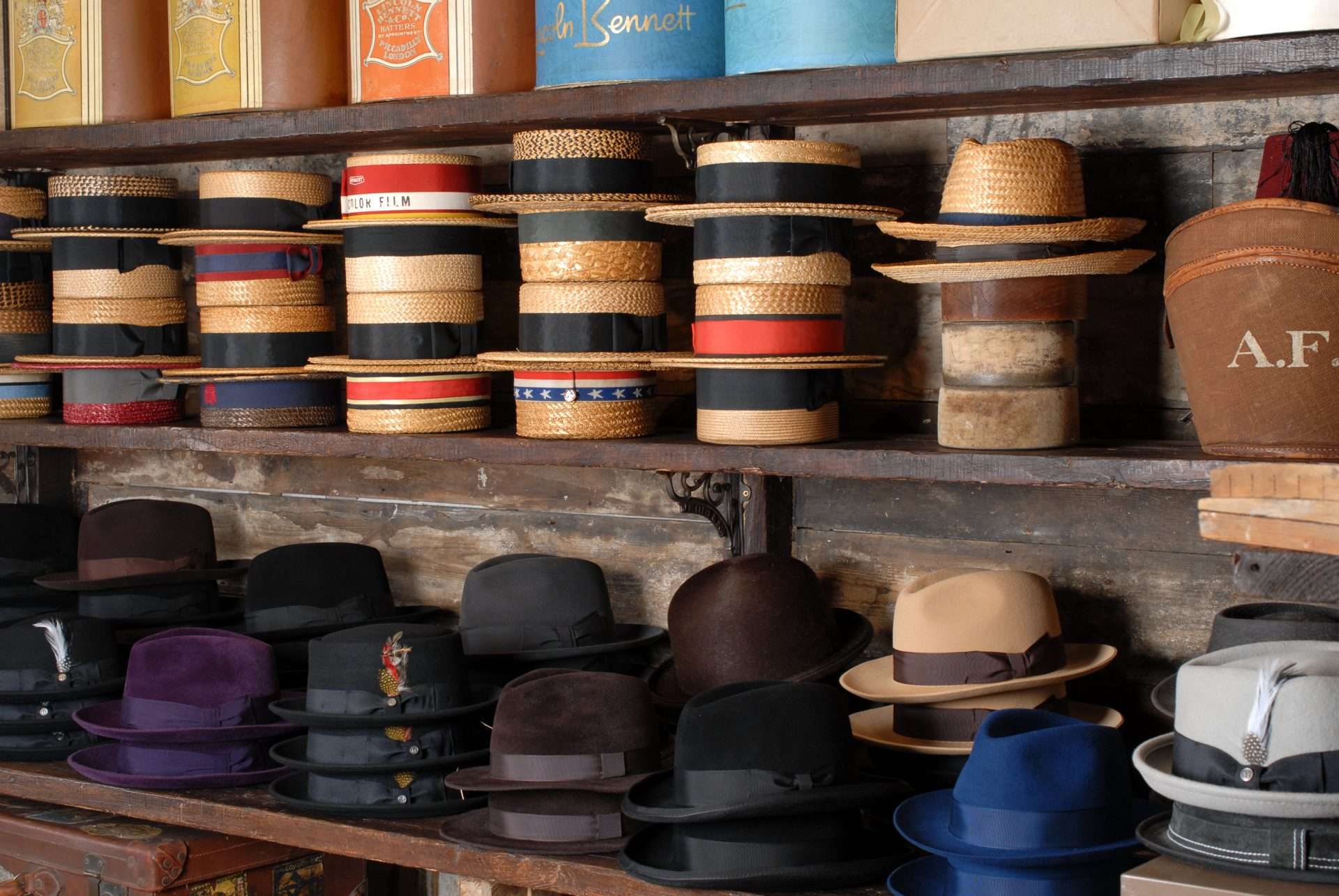
A well-made hat should never feel like something you are trying on. It should feel as though it has always belonged. At Gamble & Gunn, we have spent more than a decade immersed in traditional British headwear — flat caps, newsboy caps, heritage tweeds and structured felt hats. This guide brings together everything worth knowing before choosing your next hat, from history and fabric to fit, care and storage. Whether you are new to flat caps and fedoras or have worn them for years, this is a practical guide to choosing well and looking after a proper hat.
What Is a Traditional British Flat Cap?
A traditional British flat cap is a close-fitting cap with a short, stiffened brim and a low, streamlined crown. It became widely worn in Britain during the late nineteenth and early twentieth centuries, particularly in the countryside and industrial towns. Practical and durable, it offered protection from rain and cold while remaining comfortable for daily wear. Over time, it moved from workwear into country sport and eventually into modern British style. Today, the flat cap remains one of the most recognisable and enduring forms of British headwear.
Flat Cap vs Newsboy Cap: What Is the Difference?
A flat cap has a slim, tailored silhouette with a smooth or lightly paneled crown. A newsboy cap, often referred to as an eight-panel or baker boy cap features eight stitched sections forming a fuller, rounder crown, usually finished with a button at the top. The difference lies in volume and profile. A flat cap offers a sharper, more understated shape. An eight-panel cap carries a softer, more relaxed character.
Felt Fedoras and Structured Hats
Alongside flat caps, felt fedoras hold a long-standing place in traditional headwear. A fedora is typically defined by its creased crown and shaped brim, offering a more structured silhouette while remaining practical and wearable. Felt hats have historically been worn in both town and country settings, valued for their form, resilience and versatility.
The quality and performance of a felt hat depend largely on the material used. Most felt hats are made from either wool felt or fur felt, and understanding the distinction is useful when selecting a piece intended to last.
Wool Felt and Rabbit Fur Felt: Understanding the Difference
Felt is created by compressing and interlocking fibres into a dense, structured cloth. The type of fibre used wool or fur determines the texture, weight and long-term performance of the hat.
Wool Felt
Wool felt is produced from sheep’s wool fibres that are matted and pressed together. It provides structure and form at a more accessible price point.
Wool felt hats typically have a firmer, slightly heavier feel and perform well in dry conditions. Over time, wool felt may soften and become less crisp in shape, particularly with repeated exposure to moisture. It remains a practical and widely used material in traditional hatmaking.
Rabbit Fur Felt
Rabbit fur felt is made from fine fur fibres that are naturally softer and more pliable than wool. During the felting process, these fibres interlock densely, creating a smoother and more resilient material.
Rabbit fur felt hats generally offer a softer, more refined finish and a lighter weight on the head. They tend to retain their structure more effectively over time and show greater resilience in light rain. Because of the fibre density and quality, fur felt often develops character gradually while maintaining its form.
In traditional hatmaking, fur felt has long been regarded as the material used for higher-grade hats. The difference may not be immediately dramatic, but it becomes more apparent with regular wear and exposure to the elements.
Traditional Fabrics Used in British Caps
Fabric choice determines warmth, durability and seasonal suitability.
Harris Tweed
Harris Tweed is a handwoven wool cloth produced in the Outer Hebrides of Scotland. Protected by law, it must be dyed, spun and woven in the islands. Known for its durability and insulating qualities, it is particularly suited to autumn and winter wear.
Donegal Tweed
Donegal tweed originates from Ireland and is recognised by its subtle flecks of colour woven into the wool. It offers character while remaining versatile across both rural and urban settings.
Abraham Moon Tweed
Abraham Moon is a historic Yorkshire mill established in 1837. Its British-woven tweeds are known for depth of colour and consistency of finish. Heavier weights suit colder months, while lighter wool, cotton or linen blends are more appropriate for spring and summer.
How Should a Hat Fit?
Whether flat cap or fedora, fit is essential.
A flat cap should sit comfortably just above the ears and feel secure without pressure. It should not leave pronounced marks on the forehead, yet remain stable when bending forward.
A fedora should sit evenly around the head without pinching at the temples. It should feel balanced and stable without excessive tightness.
To measure correctly, use a soft tape around the widest part of your head, just above the ears and across the forehead. The measurement in centimetres corresponds directly to hat sizing. If between sizes, the slightly larger option generally offers greater comfort.
How to Handle Your Hat Properly
Correct handling preserves structure.
For fedoras and structured felt hats, avoid lifting them by the crown. Instead, hold them by the front and back of the brim to maintain shape. For flat caps, grasp the peak rather than compressing the crown. Always handle hats with clean hands, as natural oils and dirt can gradually transfer to the fabric.
How to Clean a Felt Hat
Cleaning should be approached with care and restraint. A soft-bristled brush will remove dust and lint from felt. A lightly dampened cloth may also be used, provided it is not overly wet and does not shed fibres.
Marks should be treated gently. A fine-pored sponge can help lift stains when moved in the direction of the felt’s nap. Rubbing against the grain will damage the surface. Grease stains are best handled professionally. Fuller’s Earth may assist in drawing oil from felt when applied sparingly and left for several hours before brushing away.
During warmer months, placing paper towels inside the sweatband can help absorb perspiration and reduce staining.
How to Clean Straw Hats and Flat Caps
Straw hats require a light touch. A soft brush removes surface dust, and a slightly damp cloth lifts light dirt. Avoid soaking straw, as excessive moisture weakens fibres.
For wool or cloth flat caps, a lint roller or soft clothes brush will maintain a neat finish.
Using Steam to Reshape a Hat
A small amount of steam can help restore shape to felt, cloth or straw. Steam gently softens fibres, allowing the hat to be eased back into form. Take care, as steam is extremely hot and excessive moisture may cause damage. After reshaping, allow the hat to dry naturally on a stand rather than on a flat surface.
What to Do If Your Hat Gets Wet
If caught in the rain, blot excess moisture gently with a towel and allow the hat to dry naturally in a well-ventilated space away from direct heat. Do not use artificial heat sources, as they may cause shrinkage. Drying on a stand helps preserve structure. A suitable waterproofing spray may improve resistance, though no fabric is entirely waterproof.
How to Store Hats Properly
Always ensure hats are completely dry before storing. If placing multiple hats in a box, position heavier pieces at the bottom and smaller sizes lower down to prevent crushing. Tissue paper or foam supports help maintain crown shape. For a single hat, store crown-side down with soft support beneath.
Avoid hanging hats on narrow hooks, as this can create pressure marks. If using a hook, it should be wide and padded. Straw hats stored during winter are best kept boxed to prevent dust settling into the weave. Keep hats away from prolonged direct sunlight to prevent fading.
About Gamble & Gunn
Gamble & Gunn is a British heritage headwear brand founded in Devon, England in 2014. The brand specialises in traditional flat caps, newsboy caps and structured felt hats made using heritage fabrics including Harris Tweed, Donegal tweed, Abraham Moon cloth and carefully selected felt. Each design reflects traditional British style with attention to proportion, fabric and longevity.
Frequently Asked Questions About British Hats & Hat Care
What is a traditional British flat cap?
A British flat cap is a close-fitting cap with a short brim and low crown, traditionally made from wool tweed and worn in Britain since the nineteenth century.
What is the difference between a flat cap and a newsboy cap?
A flat cap has a slimmer, tailored shape. A newsboy cap features eight stitched panels and a fuller, rounder crown.
What is the difference between wool felt and rabbit fur felt?
Wool felt is made from compressed sheep’s wool and offers structure at an accessible price point. Rabbit fur felt is softer, lighter and generally more resilient, retaining its shape more effectively over time.
How should a hat fit?
A hat should sit comfortably without pressure, feel secure and remain stable when moving.
How do you clean a felt hat?
Use a soft brush to remove dust. For light marks, use a slightly damp cloth or sponge, working in the direction of the nap.
What should you do if a hat gets wet?
Blot gently and allow it to dry naturally away from direct heat.
How should hats be stored?
Store completely dry, ideally in a box with tissue support, and avoid narrow hooks that may cause marks.
Please get in touch
We hope this guide has given you a clearer understanding of British hats, from traditional flat caps to structured felt fedoras, and how best to care for them.
If you ever have a question about sizing, fabrics, fit or care, please do get in touch. We are always happy to offer straightforward advice. Choosing a hat should feel considered and enjoyable, and sometimes a short conversation makes all the difference.
A well-made hat is meant to be worn, lived in and looked after. With the right care, it will not only last, but improve with time.